
Recovery · 17 September 2026 · 6 min read
Delayed Onset Muscle Soreness (DOMS): When It’s Normal and When to See a Physio or Doctor
When post-training soreness is usually expected, which warning features deserve assessment, and when to get help.
By PeakSpan Health
Delayed onset muscle soreness, often shortened to DOMS, describes muscle discomfort that appears after unaccustomed or more demanding exercise rather than during the session itself. For many active adults it is an expected, self-limiting response. The educational task is knowing when the pattern looks typical, and when assessment is the safer next step.
This article is deliberately product-free. It sits beside sleep and exercise recovery and why tendon injuries can take time to heal.
What is DOMS in plain English?
DOMS usually refers to muscle tenderness, stiffness or aching that develops hours after training, often becoming more noticeable the next day or two. It is commonly linked with new movements, a return after a layoff, or a clear jump in eccentric or overall load.
Typical education descriptions include discomfort that is felt more when the muscle is used, stretched or pressed, rather than a sharp pain at the moment of injury. Exact timing varies between people and sessions.
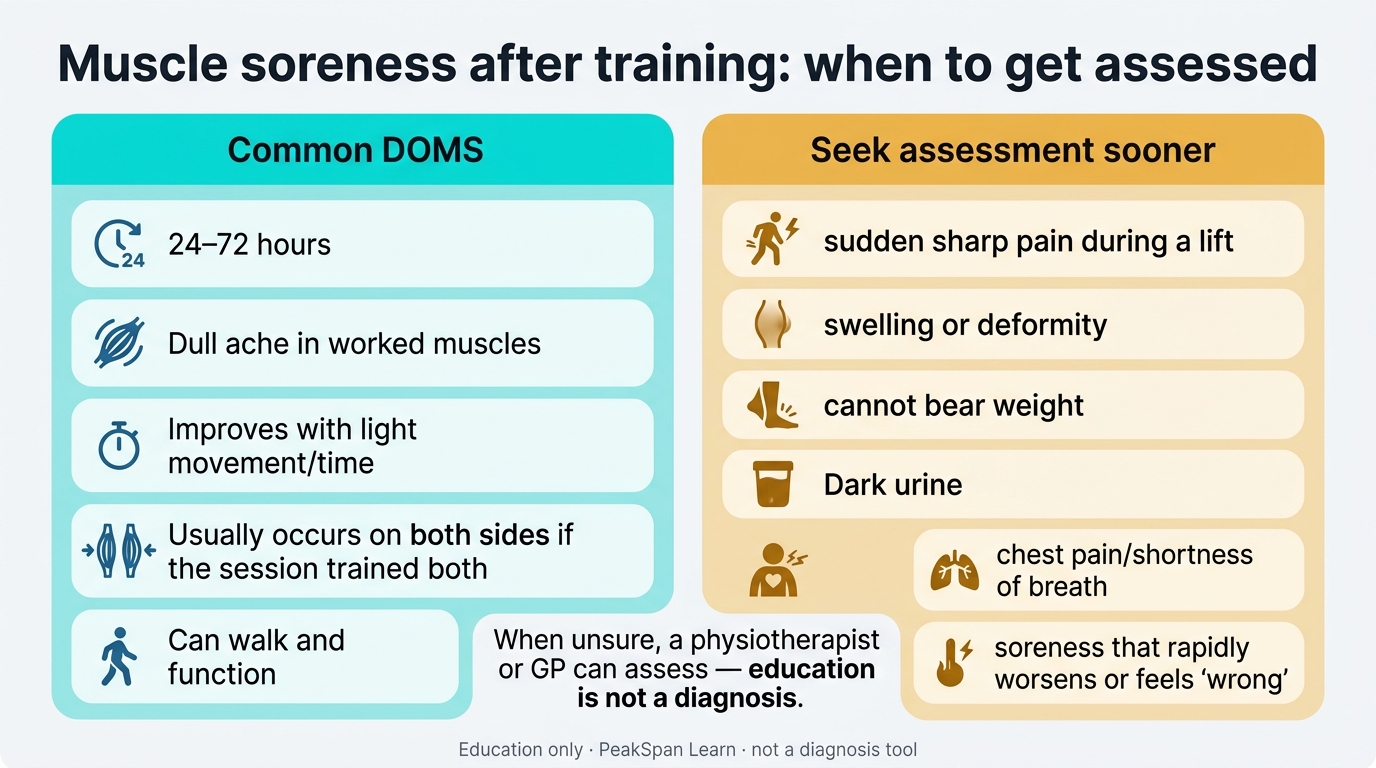
When is DOMS usually a normal training response?
A usual pattern after a training change can include:
- soreness that builds after the session rather than as sudden trauma during it
- a peak over the following day or two, then gradual easing across several days
- muscles that feel heavy or tender but still improve as you ease back into movement
- symptoms that track with a clear increase in novelty or load
“Normal” here means commonly discussed in exercise education. It is not a diagnosis and not a reason to ignore symptoms that feel wrong for you.
Which warning features deserve professional assessment?
Consider seeing a physiotherapist or doctor promptly if you notice features such as:
- sudden sharp pain during a movement, especially with a popping sensation or immediate loss of function
- swelling, bruising or joint symptoms that seem out of proportion to ordinary soreness
- marked weakness, inability to bear weight, or loss of range that is not easing
- soreness that keeps worsening beyond the usual few days, or fails to settle over about a week
- dark urine, severe unwellness, confusion or other systemic symptoms after extreme exertion
Those last systemic features are uncommon and need urgent medical care. This list is red-flag literacy, not a self-diagnosis chart.
How does muscle soreness compare with a possible injury?
A practical comparison helps conversation with a clinician:
| More consistent with typical DOMS education | More reason to get assessed |
|---|---|
| Delayed ache after a harder or novel session | Sudden pain at a clear moment of injury |
| Diffuse muscle tenderness | Focal joint pain, instability or marked swelling |
| Improves over several days with gentle movement | Worsens, locks, gives way or blocks basic tasks |
| Bothersome but patterned and settling | Night pain, neurological symptoms or systemic illness |
Overlap exists. When unsure, assessment is safer than guessing from a webpage.
Why do online recovery timelines fail individuals?
People differ in training history, sleep, stress, health conditions and the tissues involved. Tendon problems, for example, follow different recovery patterns from ordinary post-session muscle soreness. A generic “you will be fine by day three” claim cannot see your history.
If timelines online conflict with what you feel, trust clinical assessment over a chart.
How do sleep and training load fit as context?
Sleep and overall load are part of the recovery picture for many athletes and recreational trainers. They are context, not a product decision. Persistent sleep problems or repeated boom-and-bust loading are worth discussing with a qualified professional. This article does not recommend supplements or recovery products.
What does graded return mean at literacy level only?
Graded return means easing back toward usual training in steps your symptoms and function can tolerate, rather than jumping straight to the session that triggered severe soreness. The right steps depend on the person and the problem.
This is a concept description only. It is not a rehabilitation protocol, running plan or loading prescription.
When is emergency care the right call?
Call triple zero (000) or go to emergency care for severe or rapidly worsening symptoms, suspected serious injury, or signs of medical emergency after extreme exertion. Do not wait for a routine physio or GP slot in those situations.
References
- Cheung K, Hume P, Maxwell L. “Delayed onset muscle soreness: treatment strategies and performance factors.” Sports Medicine. 2003;33(2):145-164. DOI. Classic clinical review of DOMS patterns and performance effects.
- Healthdirect Australia. Exercise. General consumer guidance on starting and progressing activity safely. Checked 17 September 2026.
- PeakSpan Health. Sleep and Exercise Recovery: What the Evidence Shows. Companion recovery literacy article.
This article provides general education about post-exercise muscle soreness. It is not a diagnosis, rehabilitation plan or product recommendation. Urgent or worrying symptoms need individual clinical care.
Information checked: 17 September 2026