
Health literacy · 17 September 2026 · 6 min read
How to Prepare for a Telehealth Consultation (Questions Worth Asking)
A practical prep checklist, then useful questions on goals, process, diagnostics and limits.
By PeakSpan Health
Telehealth can be a useful way to talk with a clinician when an in-person visit is not needed, or while deciding what should happen next. Preparation does not guarantee a particular outcome. It does make it easier to share the history that matters, ask what you need to know, and leave with a clearer sense of the next step.
This article sits beside our existing guide on preparing for a doctor-led telehealth consultation. That piece covers connection setup and the flow of a typical appointment. Here the focus is the information and questions worth organising beforehand.
Why does preparation matter in a short consult?
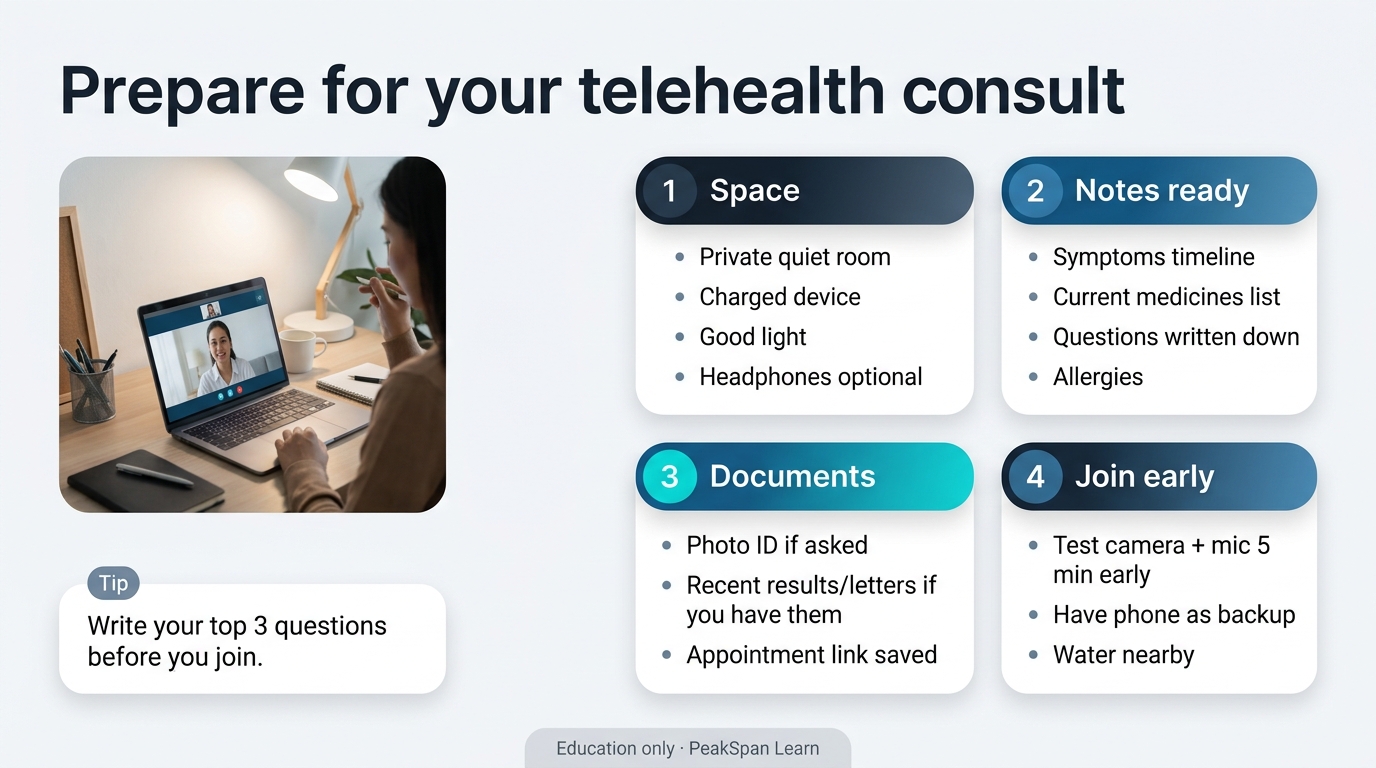
Consult time is limited. Writing down goals, history and questions before the call reduces the chance that the most important point is left until the last minute. Healthdirect’s Question Builder encourages people to prepare questions and ask again if something is unclear. The NSW Agency for Clinical Innovation also suggests having a pen, paper and a list of questions ready for virtual care.
Preparation supports the conversation. It does not replace clinical judgement about whether telehealth is appropriate for the issue you want to discuss.
What should you write down before the appointment?
A simple written list is usually enough. Consider noting:
- the main goal of this appointment in one or two sentences
- symptoms or concerns, including when they started and what has changed
- relevant medical history, allergies and previous diagnoses
- current medicines and supplements, with doses if you know them
- recent blood results, imaging reports or letters the clinic has asked you to have available
- logistics: appointment time, link or phone number, identification details, and a backup contact if the connection fails
Keep the list nearby during the call. If the clinic has asked for specific documents, have those ready to share in the way they request.
What questions help clarify the process?
Process questions help you understand who you are speaking with and what happens after the call. Useful prompts can include:
- Who will I speak with, and what is their role in my care?
- How will my notes and results be recorded and shared?
- What happens if we lose connection mid-appointment?
- How will follow-up be arranged, and who do I contact if something changes?
- What should I expect about costs, privacy and who can access my information?
These are supporting questions, not a fixed script. The right ones depend on the service and your situation.
What questions help clarify diagnostics without DIY testing?
People often want to know whether blood tests or other investigations might be discussed. That is reasonable. Ordering or interpreting your own panel from a search result is not a substitute for clinical assessment.
You could ask:
- Do we need any further information from tests or examination before deciding next steps?
- If tests are discussed, what question would they help answer?
- How should I prepare if a test is arranged?
- When and how will I receive results, and who will explain them?
A clinician may decide that no further testing is needed, that testing can wait, or that an in-person assessment is required first. This article cannot recommend a personal test panel.
What questions help clarify the limits of telehealth?
Telehealth is not suitable for every concern. The doctor decides whether it is safe to continue online. Useful questions include:
- Is telehealth enough for this issue, or do I need an examination in person?
- What symptoms or changes should prompt me to seek urgent or emergency care instead of waiting for a routine follow-up?
- What are the important uncertainties in what we have discussed today?
If you or someone else has life-threatening symptoms, call triple zero (000) rather than waiting for a routine telehealth appointment.
How can you capture answers and agreed next steps?
Before the call ends, check that you understand:
- the main conclusion from today’s discussion
- any agreed next steps, including who will do what
- how you will receive written follow-up if it is offered
- what to do if symptoms change before the next contact
If something is unclear, ask the clinician to explain it in plain language. Writing a short summary for yourself immediately after the call can help you remember what was agreed.
What are the limitations of this guide?
Preparation advice is general. It cannot decide whether telehealth is right for you, interpret your symptoms, or promise a diagnosis, prescription, test or treatment. Clinics differ in how appointments are run. Individual medical advice requires a qualified professional who can assess your circumstances.
References
- Healthdirect Australia. Virtual care clinics. Checked 17 September 2026.
- Healthdirect Australia. Question Builder. Checked 17 September 2026.
- NSW Agency for Clinical Innovation. Consumer preparation for virtual care. Checked 17 September 2026.
This article provides general information about preparing for a telehealth appointment. It is not medical advice and does not guarantee that virtual care will be suitable or that a particular clinical outcome will follow.
Information checked: 17 September 2026